

Nanjing Presents Participatory Heritage Conservation Practices at 48th World Heritage Committee Session
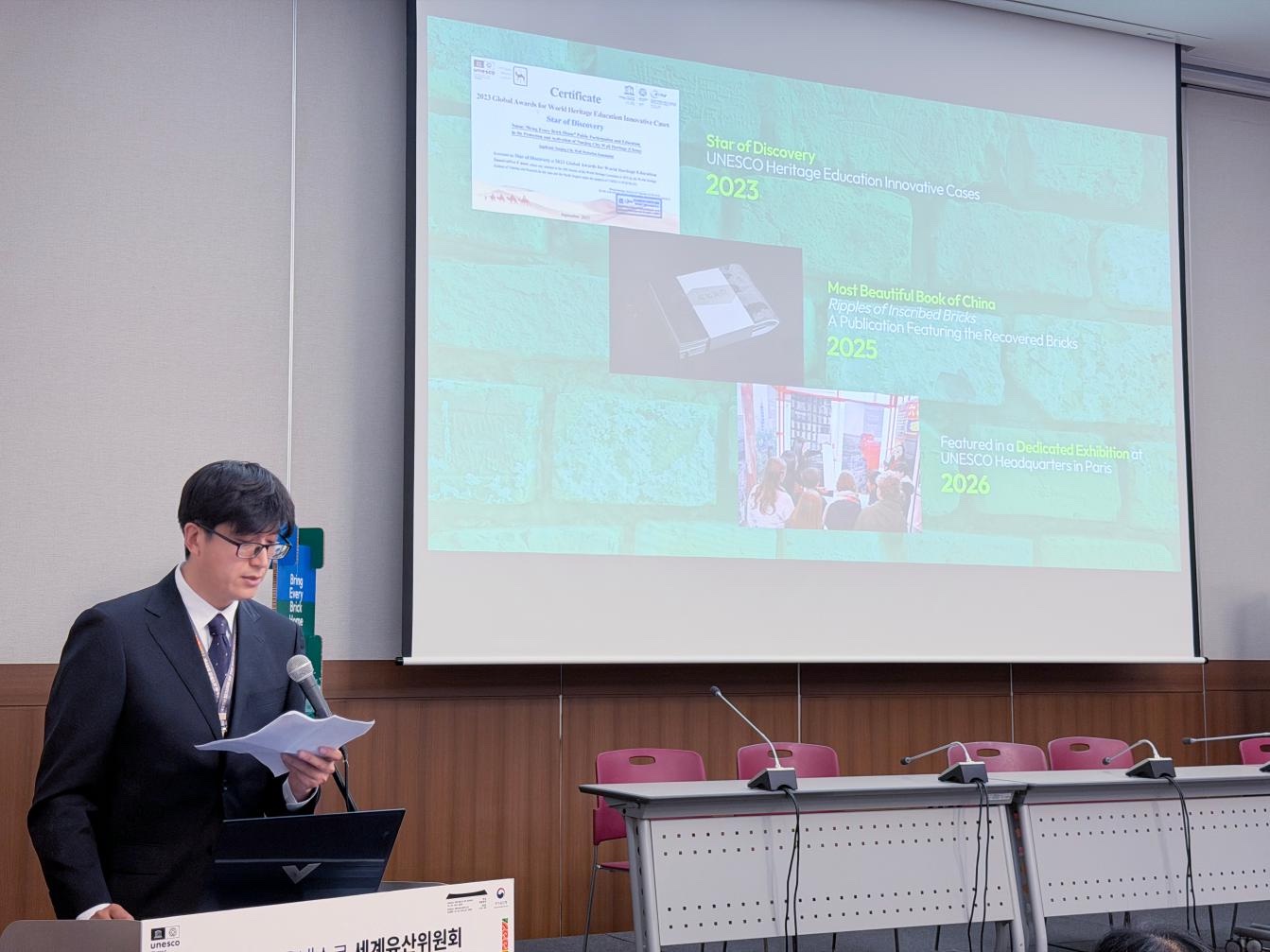
Wang Teng, Associate Research Fellow from the Nanjing City Wall Museum presenting Nanjing’s case study, highlighting the project’s international recognition
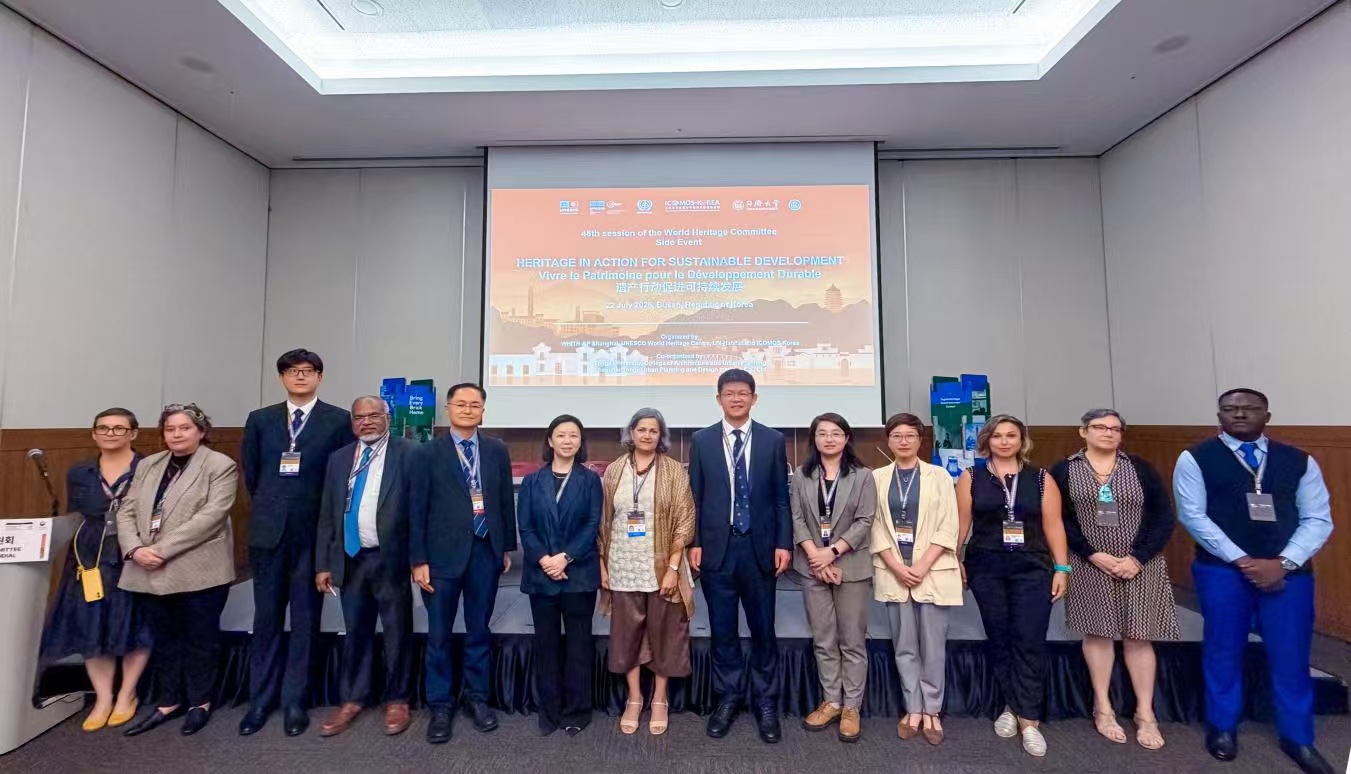
Group photo of participants from various countries at the side event ‘Heritage in Action for Sustainable Development,’ held during the 48th session of the World Heritage Committee in Busan on July 22 2026
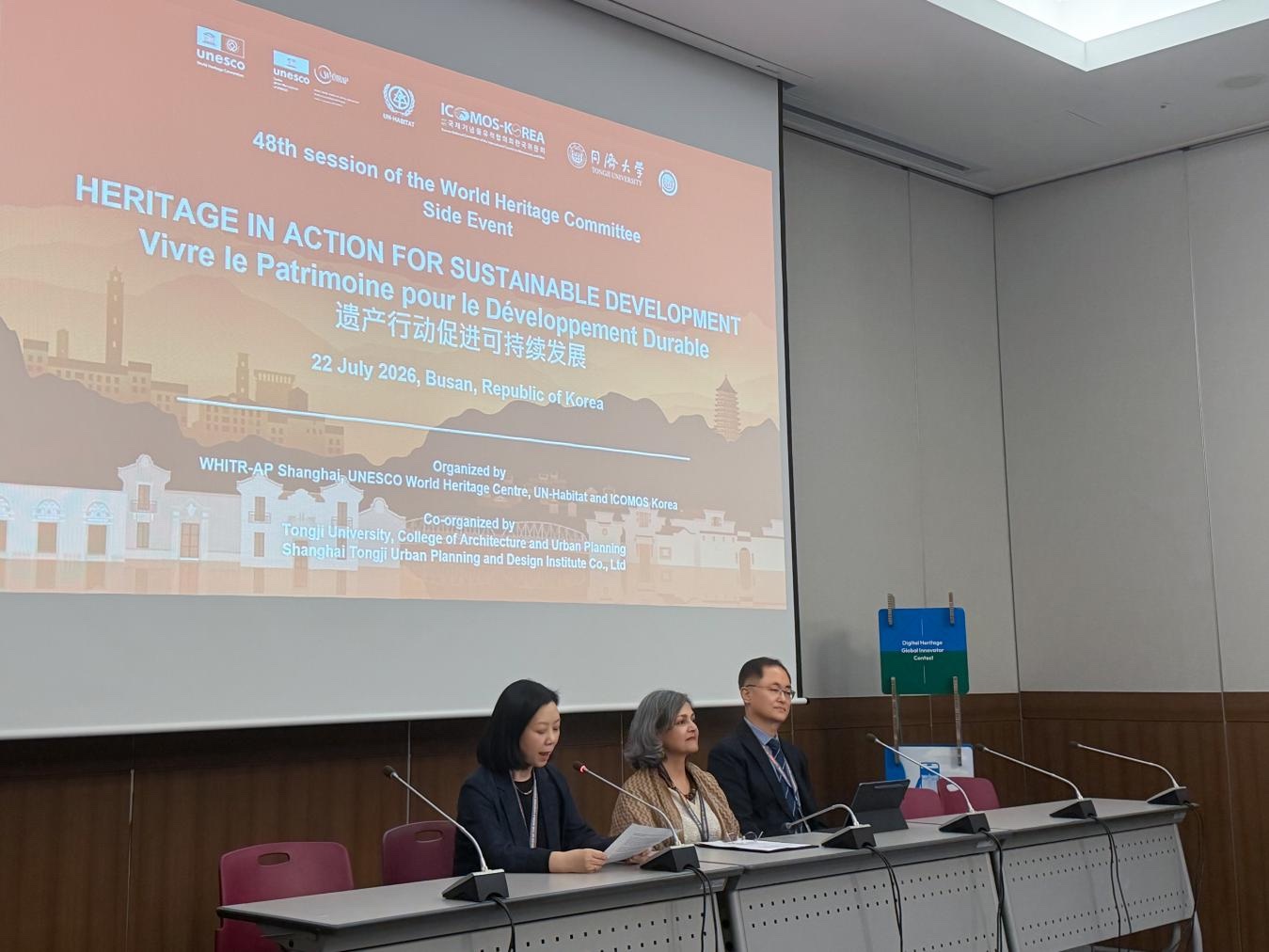
On July 22, the side event ‘Heritage in Action for Sustainable Development,’held under the 48th session of the World Heritage Committee, took place at BEXCO (Busan Exhibition & Convention Center).
A case presentation and digital exhibition highlight community-led conservation, digital reconstruction and neighborhood renewal on Nanjing's Ming City Wall
The Nanjing-initiated event, titled “Shared Heritage, Shared Future,” combined a case presentation on conservation and co-creation with “Our Wallscapes,” a digital exhibition featuring four short films. Together, the programs examined how the Ming City Wall and nearby historic neighborhoods are being conserved and integrated into contemporary urban life.
The presentation was part of a side event on heritage action for sustainable development. It was co-organized by the World Heritage Institute of Training and Research for the Asia and the Pacific Region under the auspices of UNESCO (WHITR-AP), Shanghai Centre, the UNESCO World Heritage Centre, UN-Habitat and ICOMOS Korea. The Nanjing International Communication Center contributed to the program's content.
At the meeting, the institute, Whitrap-shanghai,the UNESCO World Heritage Centre and UN-Habitat launched the five-year Heritage Hub initiative for 2026-30. The initiative is intended to support collaboration on heritage conservation and development in urban and rural settings.
“Nanjing has extensive and creative experience in connecting cultural heritage conservation with sustainable urban development,” said Shao Yong, secretary-general of the institute and director of its Shanghai center. She said she hoped Nanjing would become an important partner in the five-year initiative.
This year marks 660 years since construction of the Nanjing Ming City Wall began. Wang Teng, an associate researcher at the Nanjing City Wall Museum, outlined two projects developed under the “Shared Heritage, Shared Future” global co-creation initiative.
The first, “Bring Every Brick Home Project” began in 2016. Residents, community workers and volunteers help identify, verify and recover inscribed Ming-era bricks dispersed throughout the city. By the end of 2025, the program had visited more than 500 recovery sites and retrieved nearly 600,000 bricks, according to project organizers.
The second, “ Digital Heritage Global Innovator Contest”, uses digital design to interpret the Porcelain Tower of Nanjing, a landmark at the Great Bao'en Temple that no longer survives. Two editions of the museum-based maker program have involved more than 1,000 young participants from 19 countries, producing augmented reality works, immersive audio and digital installations for museum display.
“Bring Every Brick Home Project repairs memory by looking to the past, while Digital Heritage That Never Disappears constructs imagination for the future,” Wang said. “Together, they form a complete picture of Nanjing's participatory conservation practice through the recovery of memory and the renewal of cultural imagery.”
Doo-Won Cho, an executive committee member of the ICOMOS , described Nanjing's city wall conservation as a useful reference for comparable heritage sites worldwide.
The accompanying “Our Wallscapes” exhibition extended the discussion through four films. One documents the city brick recovery program. A second follows a 12-year lantern tradition in the Laomendong historic district. A third explores international and interdisciplinary reinterpretations of the Porcelain Tower. The fourth examines the incremental renewal of Xiaoxihu, where residents, government officials, designers, business owners and project implementers collaborate to preserve historic lanes and courtyards while improving living conditions.
Jae-Heon Choi, president of ICOMOS Korean, noted that Nanjing's Ming City Wall and Korea's Hwaseong Fortress in Suwon are both urban heritage sites facing related conservation and governance challenges. He said he was willing to explore multilevel conservation and management approaches with Nanjing.
Construction of the Nanjing City Wall began in 1366 as part of a four-section defensive system. About 25.1 kilometers (15.6 miles) of its capital city wall remain. Today, the wall functions as both historic infrastructure and public space for residents and visitors.
Andy Yan
North Professional Consulting Corp.
email us here
Legal Disclaimer:
EIN Presswire provides this news content "as is" without warranty of any kind. We do not accept any responsibility or liability for the accuracy, content, images, videos, licenses, completeness, legality, or reliability of the information contained in this article. If you have any complaints or copyright issues related to this article, kindly contact the author above.
